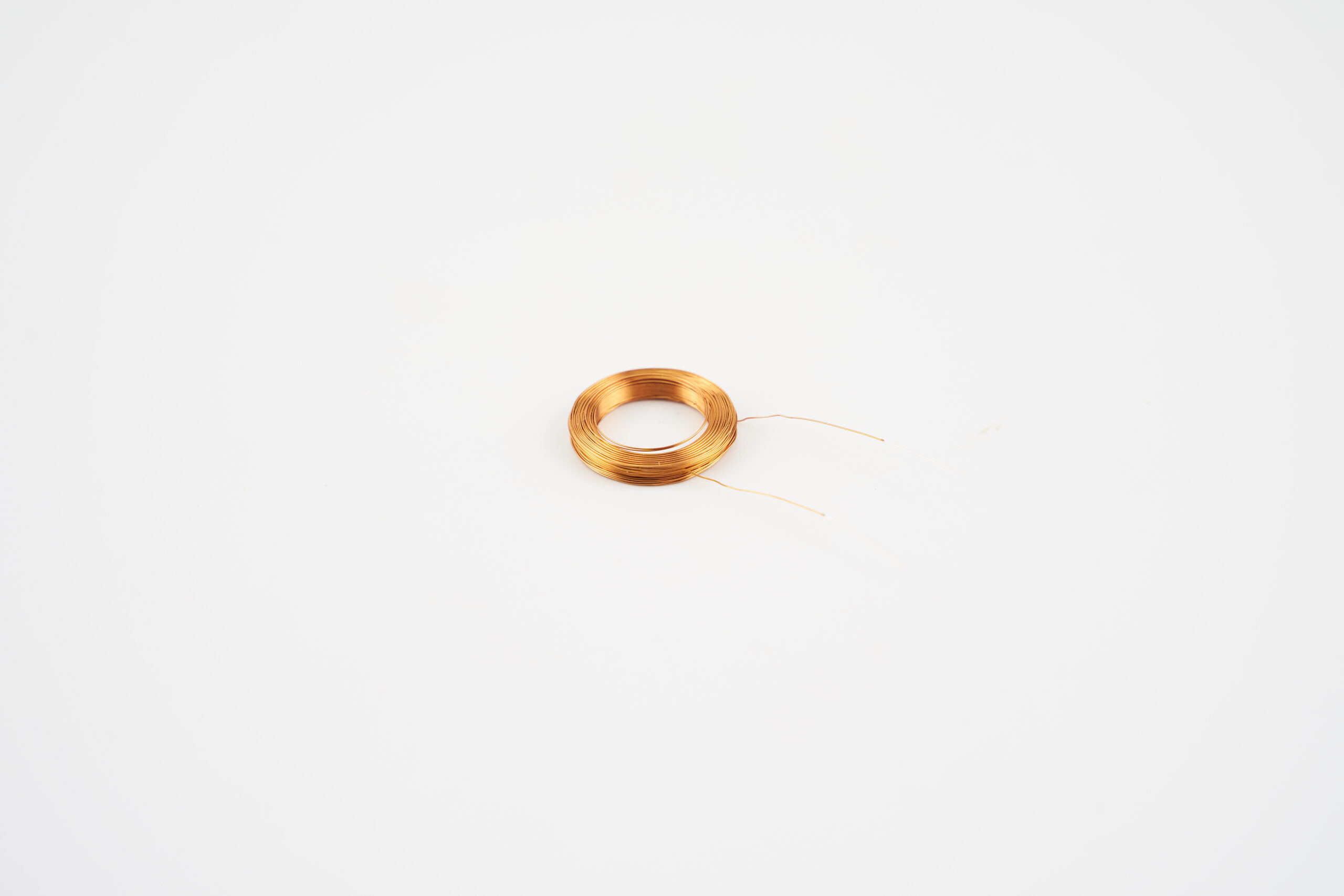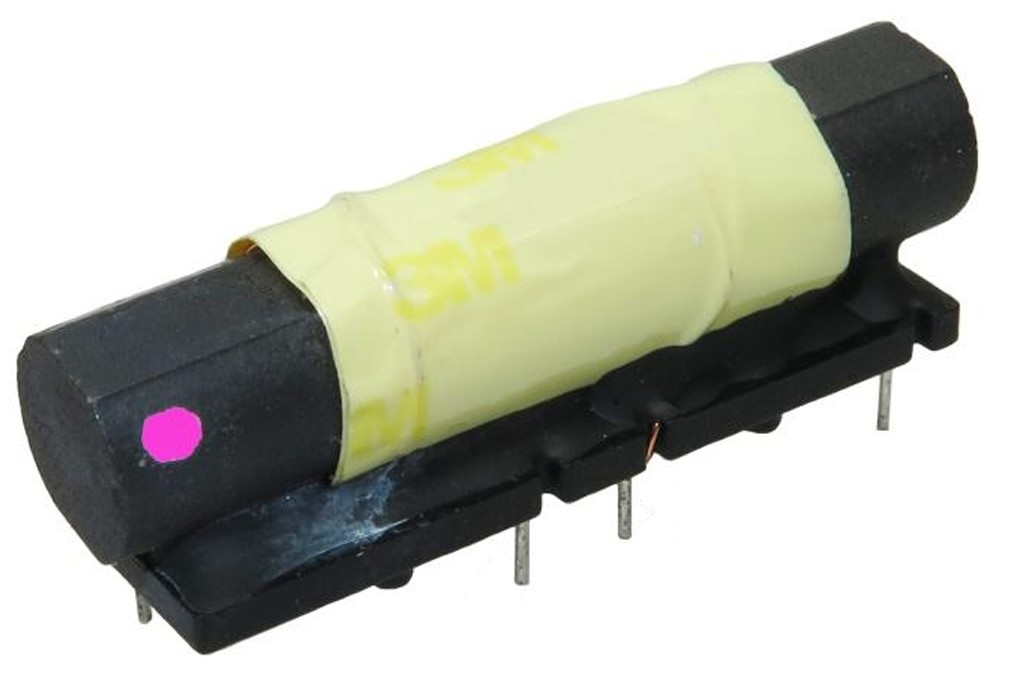
High-Q Ferrite Rod Antenna | 0.5W – 20W Power Range
How It Works
The primary job of the ferrite core is to concentrate the magnetic component of the radio wave.
-
Magnetic Flux: Radio waves consist of electric and magnetic fields. The ferrite rod has high magnetic permeability, meaning it “pulls” the magnetic field lines into itself.
-
Induction: As the magnetic field passes through the rod, it induces a small voltage in the coil of wire wrapped around it.
-
Resonance: This coil is usually connected to a variable capacitor, forming a Tuned Circuit. This allows the radio to select a specific frequency (like your favorite station) while ignoring others.
Key Characteristics
-
Compact Size: Because the ferrite rod concentrates the signal, the antenna can be much smaller than a traditional “wire” antenna. To get the same performance without the rod, you would need a massive loop of wire.
-
Directionality: These antennas are highly directional. The signal is strongest when the broadside of the rod is facing the transmitter. If you point the end of the rod at the station, the signal will drop out (a “null”).
-
Frequency Range: They are most effective at lower frequencies, specifically Long Wave (LW) and Medium Wave (MW/AM). They are rarely used for FM or higher frequencies because ferrite loses its efficiency at those speeds.
Specifications
|
Winding Construction
|
Single winding |
|
Core Shape
|
Rod core |
|
Core Size
|
"Core Length : 45mm – 70 mm : 0.5-5 W 70mm – 100 mm : 1-10 W 100mm – 140 mm : 5-20 W " |
|
Bobbin Pin Type
|
SMD, Through hole, fly wire |
|
Wire Type
|
"Enemelled copper wire Triple / Fully insulated wire (TIW/FIW) Litz / Multi-Strand wire" |
|
Wire Size
|
"0.07–0.20 mm 0.10–0.30 mm 0.20–0.50 mm" |
|
Packaging Options
|
Tray, Reel |
|
Standards
|
RoHS |
|
Operating Temperatures
|
130C, 155C |
Related Products